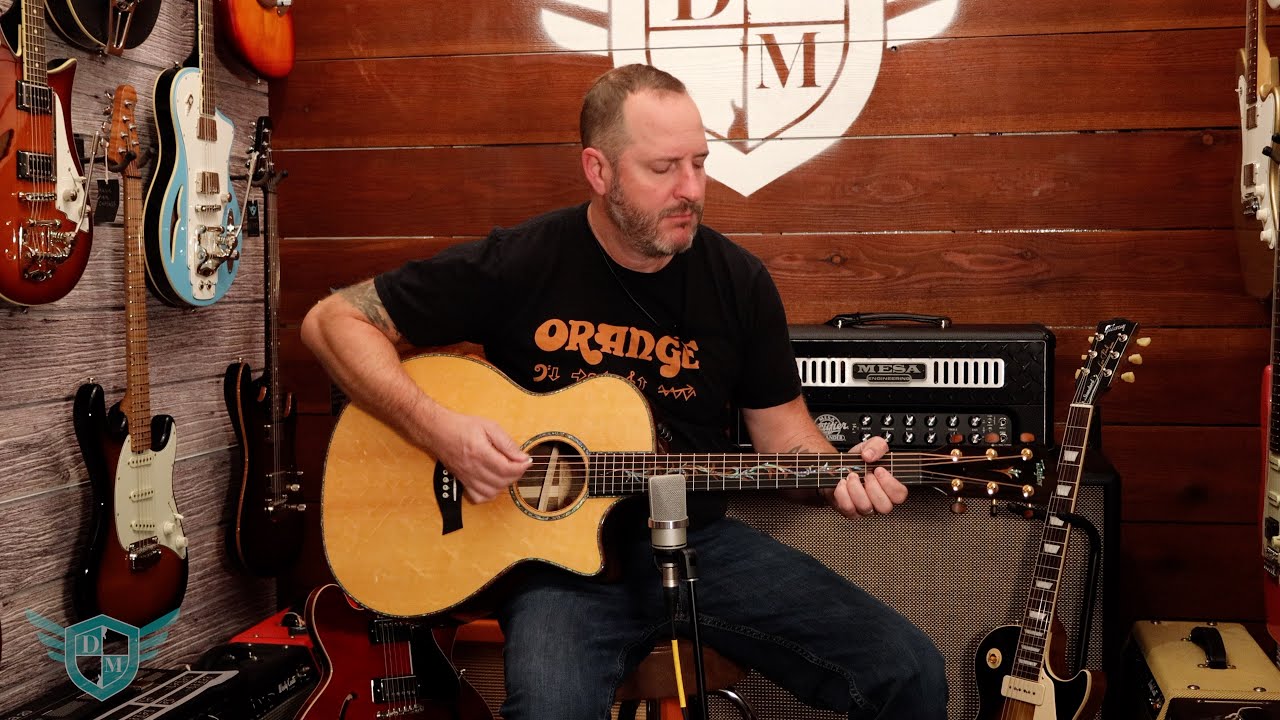
Shopping acoustic guitars should leave you sure about the instrument in the room. A name and a photo can get you interested. The visit is to hear that guitar next to another option.
At Danville Music, that is the point of the trip. We would rather you sit with two acoustics we can put in your hands than compare two listings that never shared a room.
Call first if a specific acoustic is the reason for the East Bay drive. Inventory moves. We will tell you what we can put in your hands today.
Why acoustic guitars still have to be heard in person
An acoustic guitar name tells you the family you want to hear. It does not tell you how that voice sits after two songs, or whether the neck still feels friendly in your hand.
The job on this visit is to hear the acoustic you actually care about. You are here to listen. A logo on a listing is only the start of that job.
Bring the decision you have. If one acoustic would change the buy if it sounded wrong, that guitar is the hour. If two are still in the race, a short side-by-side is the hour.
We keep the listen in the same room on purpose. Acoustic guitars vary enough that a quick strum from a photo is a weak answer.
A listing cannot settle voice
A listing can show a finish, a spec sheet, and a photo angle. It cannot tell you how the guitar sounds after a song you actually play. Voice, volume, and how it sits in your lap still have to be judged in the room.
Play it at the volume you use at home. Give it enough time that you are judging the instrument, not the picture you already liked.
Treat the listing as a shortlist. The finish line is two acoustics in the same room.
What side-by-side is for
Side-by-side means two acoustics you can hear in the same space. Two listings on a screen are not that test.
We give you room to hear the difference. We do not turn the hour into a lecture. Staff who know tonewoods and specs should make the choice clearer, not drown the guitar.
You do not need a special booth to start. You need a room quiet enough to hear what you came to hear, and enough time with both instruments.
What to listen for before you buy
The useful hour is time with the acoustic that would change the buy, next to a second option if we have one. You do not need a tour of every acoustic we have ever carried.
Listen for:
- Voice in the room
- Volume at the level you actually play
- Balance between the two pieces
- How the neck sits after a song you actually play
Staff who know the instrument should turn that into a clearer choice. You do not need pro credentials to ask which guitar is louder, warmer, or easier in your hand.
Say how you play and what you already own. Plain language is the point.
Voice, volume, and balance in the room
Listen at the volume you actually use. A whisper strum and a full song are different tests. Ask us which differences you will notice between the two pieces in front of you.
Play the same short passage on both. Voice, volume, and balance show up faster that way than a long wander across the wall.
If one guitar hides the other, say so. That is useful information. We will stay with the two in the room.
Neck and how it sits after a song
Sit with it long enough to notice neck, weight, and whether the guitar still feels friendly. Two minutes on a hook does not settle those. Twenty minutes in the room often does.
If you play seated, say so. If you play standing, with a strap, say that too. Those details change which guitar you should sit with first.
Bring the songs you actually play if that helps. We can work from that. We do not need a full spec sheet to start.
How to compare acoustic guitars on the floor
Use this method:
- Play the acoustic that would stop the purchase if it sounded wrong.
- Compare a second option if we have one that belongs in the same decision.
- Listen for voice, volume, and how the neck sits after a song you actually play.
The list is short on purpose. A long options list usually means you did not hear the guitar.
Keep the hour on the acoustics that would change the buy. You do not need to settle a longer brand list on this trip.
Play the acoustic that would change the buy
If one acoustic on your list would stop the purchase if it felt or sounded wrong, play that one first. That is the decision you actually have.
Sit with it long enough to notice voice and neck. Then put the second guitar next to it if we have one. Hear both before you decide.
If it is the one, you will know. If it is not, set it down and say so. We will stay with the guitars in front of you.
Verified facts vs hunt names
Dealer facts that apply to acoustic lines we stand behind:
- Taylor Premier dealer
- Yamaha Premier guitar dealer for Yamaha acoustics
Families you can ask to try:
A family we carry is not the same as a dealer designation, and neither one is a live count. If Taylor, Yamaha, or another acoustic on that list is why you are coming, call and we will tell you what we can put in your hands.
This visit stays on the acoustics in front of you. Leave custom-order work, electrics, and bass for another trip.
How to try acoustic guitars on one Danville visit
Use this method:
- Say the acoustic you came for.
- Confirm we can put it in your hands today.
- Play it next to a second option if we have one that belongs in the same decision.
The list is short on purpose. You do not need a special demo day to begin. Name the guitar, confirm it is here, and listen.
| If you... | What the visit is for | How to keep it a side-by-side listen |
| Already have one acoustic in mind | Hear that guitar | Sit with it; set it down if it is wrong |
| Are comparing two acoustics | A short side-by-side | Only if both are actually here |
| Need to judge voice at your volume | Time in the same room | Play the same short passage on both |
Tell us what you play now, and what you think you want next. We help you compare what is here. That is enough for a first visit.
Call first if a specific acoustic would change the drive
Do this before you drive:
- Call (925) 743-0898 or contact us with the acoustic on your list.
- Tell us what you play now if that helps us set up a fair comparison.
- Confirm hours. Our weekly schedule sometimes changes. Ask before you leave home.
- Confirm the piece if it is the whole point of the trip.
We will tell you what we can try. A call still saves a wasted East Bay drive.
We are at 115 Town and Country Dr E, Danville, CA 94526.
What we can and cannot promise about these acoustic guitars
We are a Taylor Premier dealer and a Yamaha Premier guitar dealer. We have Gibson acoustic, PRS acoustics, Collings, Santa Cruz, and Bourgeois as families you can ask about.
A dealer fact or a family name is not a live count. Confirm what is here before you visit.
Setup and guitar repairs matter after you buy. They are why a shop you can return to still counts once the acoustic choice is done.
If you later want to shop online, read current shipping terms first. Use those options after you know the guitar, not instead of hearing it.
This visit stays on acoustics. Come for the guitar that would change the buy.
A collection is not a live count
Treat current Taylor, Gibson acoustic, PRS acoustics, Yamaha acoustics, Collings, Santa Cruz, and Bourgeois guitars as families we can put in your hands when we have them.
Call about the piece you care about. We will tell you whether we have something in that family to play, or whether you should wait.
Frequently Asked Questions
Do you have acoustic guitars I can try in Danville?
Yes. Selling acoustic guitars is a core part of what we do, and we keep acoustic families on the floor when we have them. Inventory changes, so confirm before you visit.
If you are coming for a specific acoustic, say the name when you call. We will tell you what we can put in your hands.
We will not recite a live model list here. The useful answer is what is here today.
Do I need an appointment to compare two acoustics?
Call (925) 743-0898 or contact us before you drive if a specific acoustic is the reason for the trip. We can tell you what we can try, and we can confirm hours.
Walk-ins happen. If the visit depends on two instruments in the same hour, a heads-up still helps.
Can I sit two acoustic guitars next to each other?
Yes, if both are actually here. Bring the two that would change the buy, and we will help you try what we can put in your hands.
Do not expect every model of both names in one hour. One guitar from each side of the decision, played well, is a better visit than a tour you cannot hear.
If only one acoustic is here today, we will say so before you drive.
What if the acoustic guitar I want is not here today?
Ask us about current options. You can also review inventory on Reverb, and we offer free domestic shipping on orders. Confirm current shipping and return terms before you commit to a box.
If waiting for a visit would be smarter than shipping, we will say so.
The honest answer is the useful one: what we have, what we do not, and whether the drive is still worth it.
Come listen to acoustic guitars side by side in Danville
If you have been staring at two acoustic listings and delaying the drive, come hear them in the same room. Choosing acoustic guitars in Danville should feel like time with the instruments, not a countdown.
Visit us in Town and Country, or contact us about the acoustic on your list. We will help you play what is here, and we will still be here for setup or guitar repairs after you choose.
Bring the decision. Give it an unhurried hour. That is the visit.